
The Rise of Microgrids: A Game-Changer for Industrial Sites
Published: Friday, 31 July 2026
As the demand for industrial energy continues to grow, businesses are looking for solutions that offer reliability, cost efficiency, and sustainability. Microgrids have emerged as a transformative energy solution, allowing industrial sites to generate, store, and manage their own power independently from the main grid. In this article, we will look at what microgrids are and will discuss how they are impacting industrial sites.
What are microgrids?
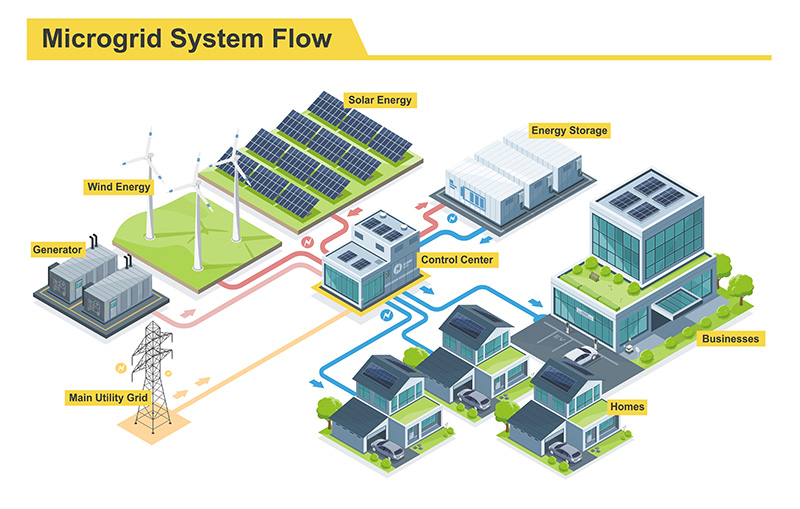
Microgrids are localised energy systems that can operate in connection with the traditional grid or independently in what is known as an “islanded” system. These systems will typically incorporate renewable energy sources like solar and wind, along with battery storage and advanced energy management systems, to create a more resilient and cost-effective energy solution.
The Driving Forces Behind Microgrid Adoption
Energy Resilience & Reliability
Industrial operations depend on an uninterrupted power supply, and any outage can result in significant financial losses. Microgrids offer enhanced reliability by providing backup during grid failures and reducing the risk of costly downtime.
Cost Savings
By leveraging renewable energy sources and energy storage, microgrids help industrial sites reduce electricity costs. Strategies like peak shaving, where stored energy is used during high-demand periods, help lower energy bills by minimising reliance on expensive grid electricity.
Sustainability & Net Zero Goals
With businesses facing increasing pressure to reduce their carbon footprint, microgrids provide a practical pathway to sustainability. By integrating renewable energy sources, companies can decrease their dependence on fossil fuels and make meaningful progress towards net zero emissions.
Energy independence
Industrial sites operating in remote or unstable grid environments benefit from microgrids by gaining greater control over their energy supply. This reduces exposure to fluctuating energy prices and supply chain disruptions. in disruptions.
Key Technologies in Industrial Microgrids
Renewable Energy Integration
Solar panels, wind turbines, and biomass generators form the backbone of many industrial microgrids. These renewable sources provide clean, cost-effective power, reducing dependence on conventional fossil fuel-based electricity.
Battery Storage & Energy Management Systems (EMS)
Energy storage solutions such as lithium-ion or flow batteries allow excess energy to be stored and used when needed. Advanced EMS technology optimises energy consumption, ensuring efficiency and seamless grid interaction.
Smart Controls and AI Optimisation
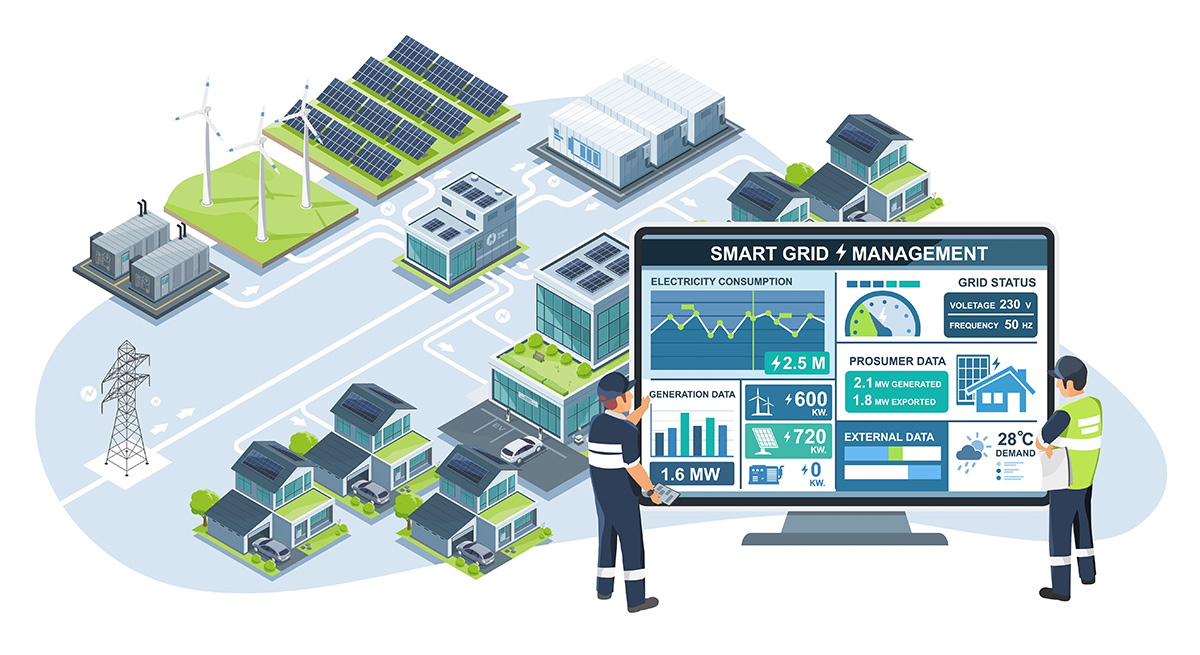
Artificial intelligence and IoT-powered analytics enable industrial sites to monitor and manage energy usage in real-time, improving efficiency and reducing costs. Automated load balancing ensures optimal power distribution.
Combined Heat and Power (CHP) Systems
Some industrial microgrids incorporate CHP systems, which generate electricity while utilising excess heat for onsite processes, improving overall energy efficiency.
Challenges & Barriers to Adoption
Despite their advantages, microgrids face several challenges:
High Upfront Investment Costs: While microgrids offer long-term savings, initial installation and infrastructure costs can be a barrier for some businesses.
Regulatory and Policy Constraints: Different regions have varying regulations for microgrid deployment, which can impact implementation timelines and feasibility.
Integration Complexity: Existing industrial sites may require significant upgrades to incorporate microgrids effectively.
The Future of Microgrids in Industrial Applications
As technology advances, we expect to see an acceleration of the adoption of microgrids. Innovations in battery storage, AI-driven energy optimisation, and government incentives are making microgrids more accessible and cost-effective. With the global push for sustainability and energy independence, microgrids will play a crucial role in decarbonising industrial operations and securing a stable energy future.
Microgrids are revolutionising how industrial sites manage their energy needs by enhancing resilience, reducing costs, and promoting sustainability. Microgrids offer a compelling solution for businesses looking to future-proof their energy strategies. As demand for reliable and green energy grows, industrial microgrids will become an essential component of the modern industrial landscape.