

In-Duct Fans
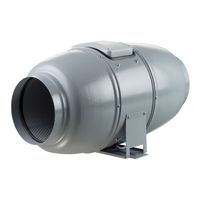
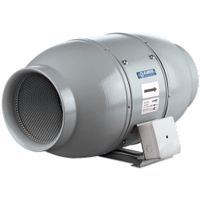
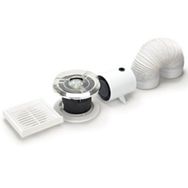
In-Duct Fans are designed to boost ventilation by fitting directly into ductwork, providing powerful extraction or supply airflow without occupying indoor space.
Ideal for use in bathrooms, kitchens, utility rooms, or areas with long duct runs, they offer higher pressure performance compared to standard axial fans.
The benefits include quieter operation, discreet installation, and significant energy savings, thanks to mixed flow or centrifugal designs with efficient motors.
We offer trusted in-house brand Osily, with fan models offering integrated timers, mixed flow or centrifugal blades, and IPX4 splash-resistant builds.
Popular customer specifications include diameters of 100mm, 150mm, 200mm, 250mm, and 315mm, airflow capacities ranging from 187m³/h up to 1750m³/h, noise levels between 32dB and 56dB, and energy-efficient IE2 or IE3 motors.
For streamlined, powerful duct ventilation, choose In-Duct Fans to deliver clean, efficient airflow.
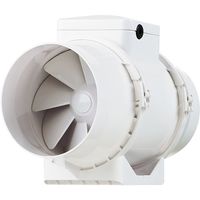

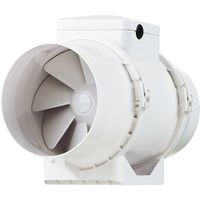
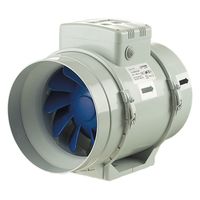
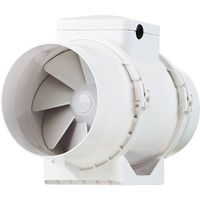
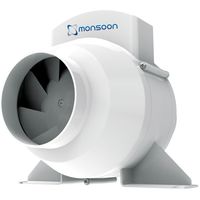

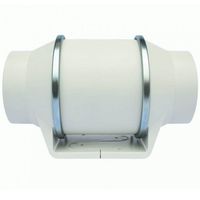

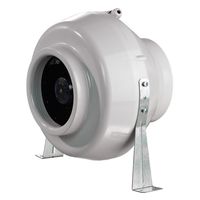
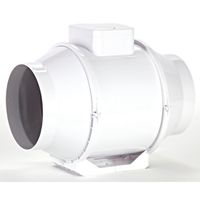

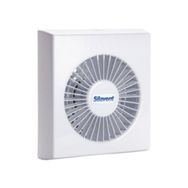
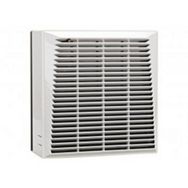
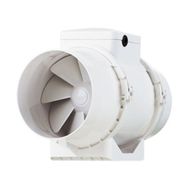
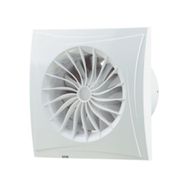
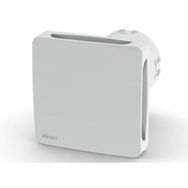
What is an in-duct fan?
An in-duct fan is a ventilation unit that sits inside the ducting rather than being fixed directly to a wall or ceiling. It works as part of the duct system to move extracted air away from a room and out of the building, rather than pulling air out at the point of installation.
How does an in-duct fan operate?
In-duct fans use a built-in motor and impeller to draw air through the connected ductwork. Because the fan is positioned within the duct run, tit helps maintain airflow as air travels through longer lengths of ducting or around changes in direction.
When is an in-duct fan a better choice than a standard extractor fan?
An in-duct fan is often chosen when ventilation needs to travel further to reach an external outlet. They are commonly used where a duct runs longer, include multiple bends, or where a conventional wall or ceiling extractor would struggle to move air efficiently.
Are in-duct fans quieter than wall-mounted extractor fans?
In many cases, yes. Because the fan motor is installed away from the room itself, such as within ceiling voids or roof spaces, the sound level heard inside the room can be lower compared with extractor fans fitted directly on walls or ceilings.
Do in-duct fans improve airflow through ducting?
Yes. In-duct-fans are designed to help airflow remain consistent through duct systems with higher resistance. They generate enough pressure to keep air moving through longer duct runs, helping ventilation systems perform more reliably.
Where are in-duct fans typically used?
In-duct fans are commonly used in bathrooms, kitchens, shower rooms, and utility spaces, as well as in light-commercial environments. They are especially useful where ventilation needs to be ducted through ceilings, lofts, or service voids.
Are in-duct fans suitable for home ventilation systems?
Many in-duct fans are designed specifically for domestic use and can support effective ventilation in residential settings. Suitability depends on factors such as duct size, airflow rating and the demands of the space being ventilated.